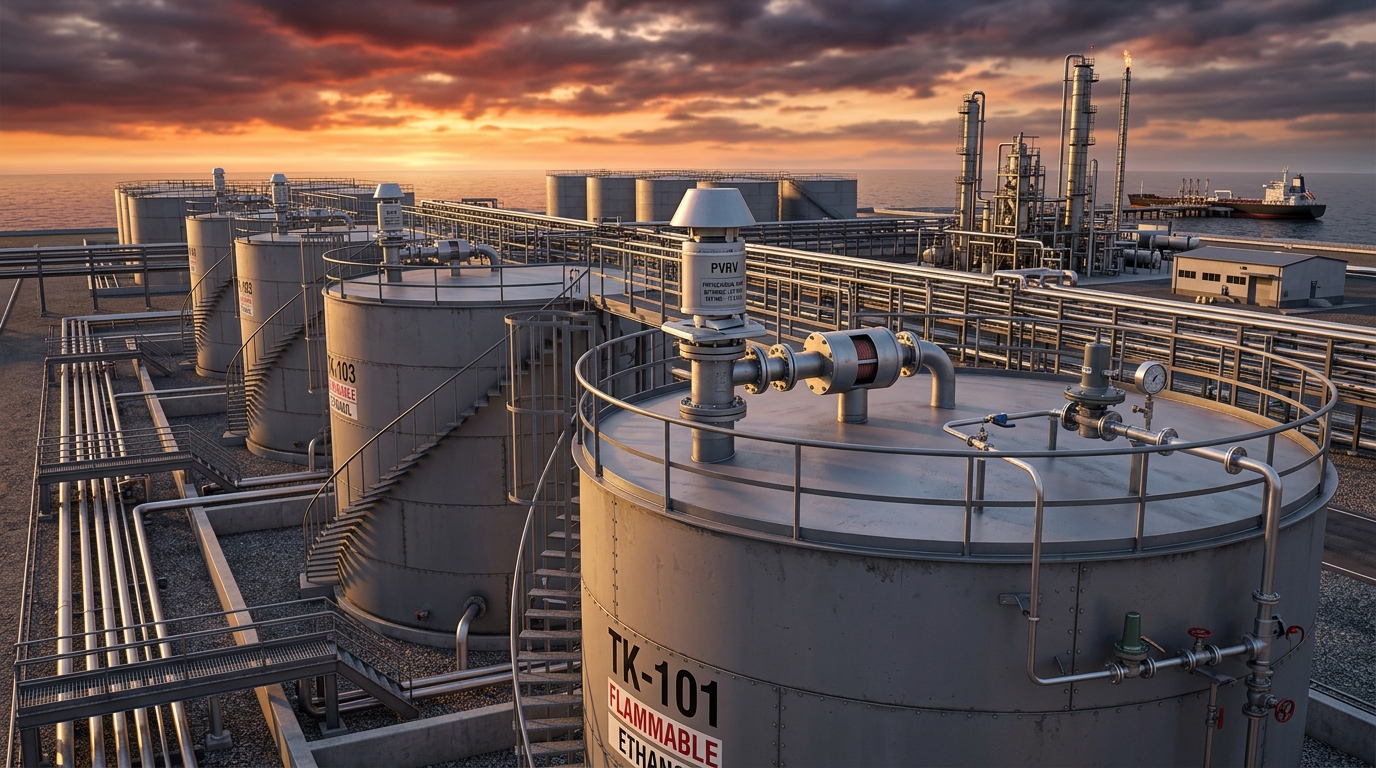
Atmospheric and low-pressure storage tanks containing flammable solvents, hydrocarbons, and petrochemicals present severe explosion and structural collapse hazards. Without certified Tank Protection & Process Safety Devices, thermal breathing (day/night ambient temperature cycling) and pump in/out operations can cause structural tank rupture or implosion.
1. The Four Pillars of Atmospheric Storage Tank Safety (API 2000 Standards)
A comprehensive tank protection installation relies on four inter-connected safety layers:
- Pressure / Vacuum Relief Vents (Breather Valves): Regulate normal thermal breathing and product displacement. Our End-of-Line Breather Vents feature weighted pallets and magnetic cushions to prevent vapor loss until set limits are reached.
- Flame Arresters (Deflagration & Detonation): Installed in vent lines to quench flame propagation. Precision-crimped stainless steel ribbon elements extract thermal energy below the auto-ignition threshold (Explore Flame Arresters).
- Emergency Relief Vents: Hinged or loose-cover manhole vents that open during pool fire exposure, discharging extreme volume to avoid catastrophic tank rupture (Emergency Vents Series).
- Nitrogen Blanketing Regulators: Maintain a positive inert gas blanket inside the tank vapor space, preventing air/oxygen ingress and product degradation (Nitrogen Blanketing Valves).
Deflagration flame arresters are designed for subsonic flame fronts near atmospheric vents, whereas In-Line Detonation flame arresters are engineered to withstand supersonic shockwaves (over 1800 m/s) and severe overpressures within closed piping manifolds.
2. Nitrogen Blanketing vs. Open Venting: Cost & Safety Benefits
| Feature | Active Nitrogen Blanketing | Standard Atmospheric Venting |
|---|---|---|
| Explosion Risk | Extremely Low (O2 Inerted) | Requires Flame Arresters |
| VOC Vapor Emissions | Minimized (Zero Vapor Escape) | Vapor Loss during Outbreathing |
| Product Purity | Protected from Moisture & Oxidation | Exposed to Atmospheric Humidity |
3. Ensuring Overpressure Protection in Connected Pipelines
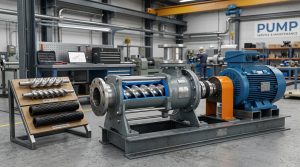
In addition to tank venting, transfer pipelines require pressure safety valves, thermal expansion relief, and rupture discs (Rupture Discs). For pumping stored fluids to processing units, plants rely on heavy-duty Industrial Progressive Cavity Pumps.
Looking for Precision Engineered Tank Protection & Process Safety Equipment?
Chemoil Advance Technology manufactures and supplies certified, heavy-duty fluid control and process safety equipment tailored for harsh chemical, petrochemical, and refining operations.